From Our Farm to Your Family
What the Desert Gives Our Honey and Olive Oil
Wadi El Natrun sits in Egypt’s Western Desert, about 90 kilometres north-west of Cairo. It doesn’t look like farming country. The ground is deep sand, the sun is fierce and the water underneath is brackish. Handled with patience, each of those things works in our favour.
The sandy soil drains fast, and olive trees hate wet feet. Long, dry, sunny seasons ripen the olives slowly and fully. The soil’s natural alkalinity suits berseem, the Egyptian clover that draws nitrogen into the ground as it grows, so the land gets richer without being forced. Our hives sit in the middle of those clover fields. When the berseem flowers, the bees have one great source of nectar on their doorstep, and that gives our honey its light colour and gentle sweetness. Sunshine almost every day, steady warmth and very little rain give the bees a long working season.
The water is where Delta Water comes in. Before our brackish groundwater reaches the fields, it passes through a magnetic field that protects soil and roots from salt damage, helps plants take up water and nutrients, and cuts our need for chemical fertiliser by up to half. Treated water feeds the olives and the clover. The clover feeds the soil and the bees. The bees give us honey, and the olives give us cold-pressed extra virgin oil.
Planting Where Nothing Grew
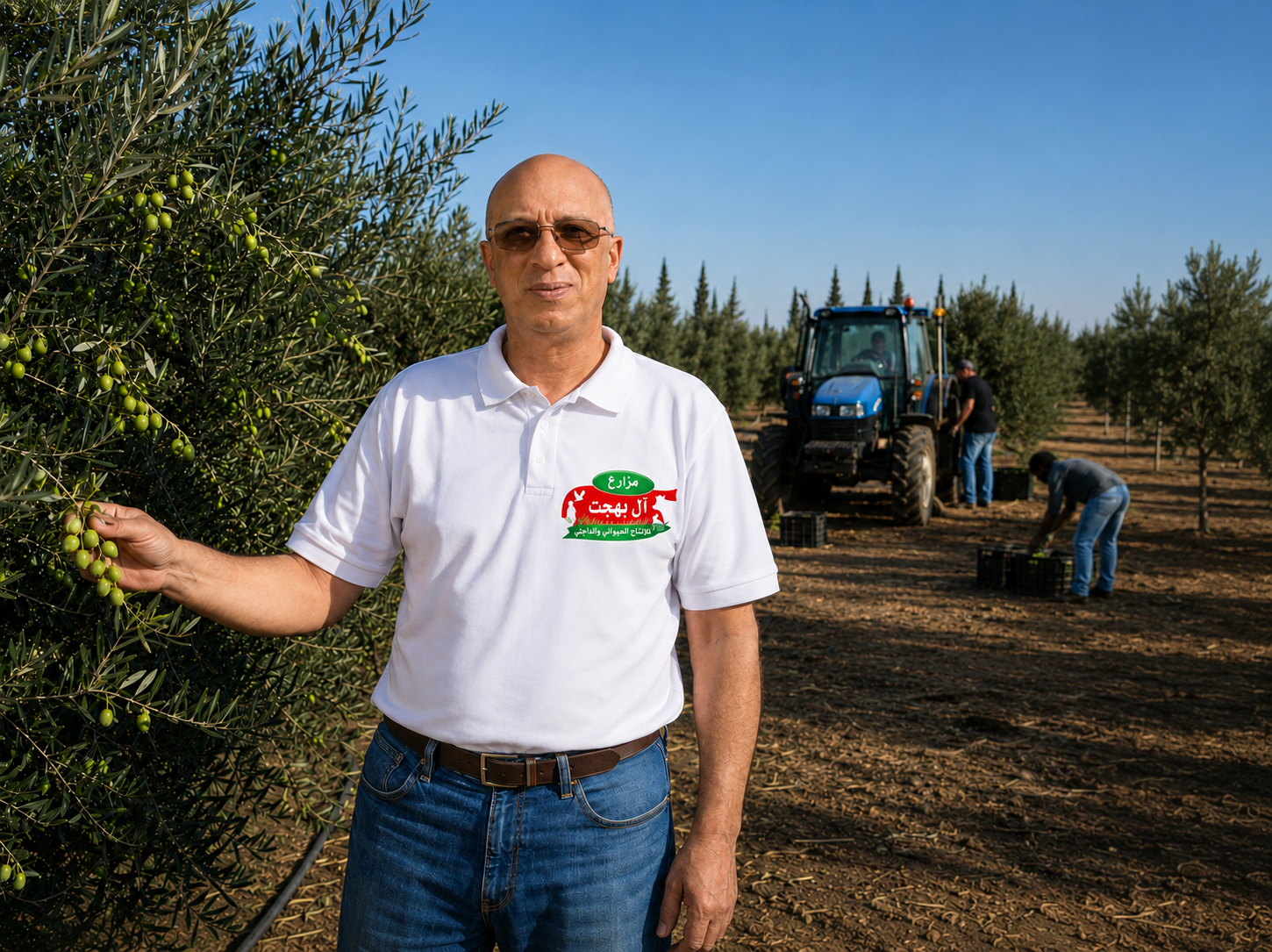
In 2010, Ahmed Bahgat and his brother Mohammed took on a stretch of desert at Wadi El Natrun and began planting olive trees and date palms. Plenty of people told them nothing would grow there. For the first few years, those people were nearly right: sandy earth, brackish water, and every harvest a guess.
Ahmed held to one rule from the start: grow less if you have to, but grow it well. The brothers planted berseem clover to build up the soil, and the clover brought the bees. Their honey was so clear and mild that it changed the direction of the farm. Honey joined the olives, greenhouses followed, and later a pigeon tower. In 2015 we opened our logistics base in Abis 7th Village, near Alexandria, close to the highway and the airport, so everything we grow can be packed, sold and exported straight from our land.
Today Ahmed’s son runs the farm alongside him, with other members of the family across the business. Nobody here learned the job from a manual. It was passed on in the groves, season by season. Many of the families who helped reclaim this land in 2010 still work it, and they talk about the farm as theirs.
We farm for today and for the generations after us. That means caring for the soil, the animals and the bees, and taking the careful way over the shortcut. For us, doing right and doing good work have always been the same thing.

- 1Desert groundwater
- 2Treated with Delta Water
- 3Olive groves and clover fields
- 4Clover feeds the soil and the bees
- 5Honey and cold-pressed olive oil
Old Farming Sense, New Water Science
Much of what we do, an Egyptian farmer from a hundred years ago would recognise. Clover to feed the soil. Bees among the crops. Patience. The difference is in the water.
How Magnetic Water Treatment Works
Our groundwater is naturally brackish. Left untreated, salt builds up in the soil and around the roots, and plants struggle to drink. A Delta Water unit sits on our irrigation line and passes the water through a magnetic field before it reaches the fields. It’s designed to stop salt damaging the soil and roots and to help plants absorb water and nutrients.
What It Has Changed
Since we began treating our water, our trees and clover have grown stronger. For the bees, stronger plants mean more flowers and more nectar. For you, that means a cleaner, fuller flavour in every jar.
Feeding the Soil
Berseem clover does a lot of our fertilising for us. Its roots fix nitrogen in the ground, so the soil gets richer every season it grows. Where the trees need more help, we use chemical fertiliser sparingly.
Land We Mean to Hand On
We say it often on the farm: we’re looking after this land, not using it up. Every decision gets weighed against what it will do to the soil in ten or twenty years, not just this season.
In a desert, water is the first test. Treating ours means we get more from every litre and do less harm with it. Clover rebuilds the soil. Fewer chemicals go into the ground. Bees are moved with care and never pushed past what the flowers can give them.

Taste what the desert grows, or talk to us about supplying your business.
Who We Are
We’re the Bahgat family. Since 2010 we’ve been farming the desert at Wadi El Natrun, growing olives, clover and, thanks to the bees, honey. Ahmed Bahgat is still on the farm, now with his son alongside him, and we still run it the way we started: doing it well matters more to us than doing it big.
Why We Do This
We wanted Egyptian families to be able to buy honey they can trust, at a fair price, without paying for the chain of traders between the farm and the shop. So we sell it ourselves, straight from our land to your door.
Why Berseem Clover?
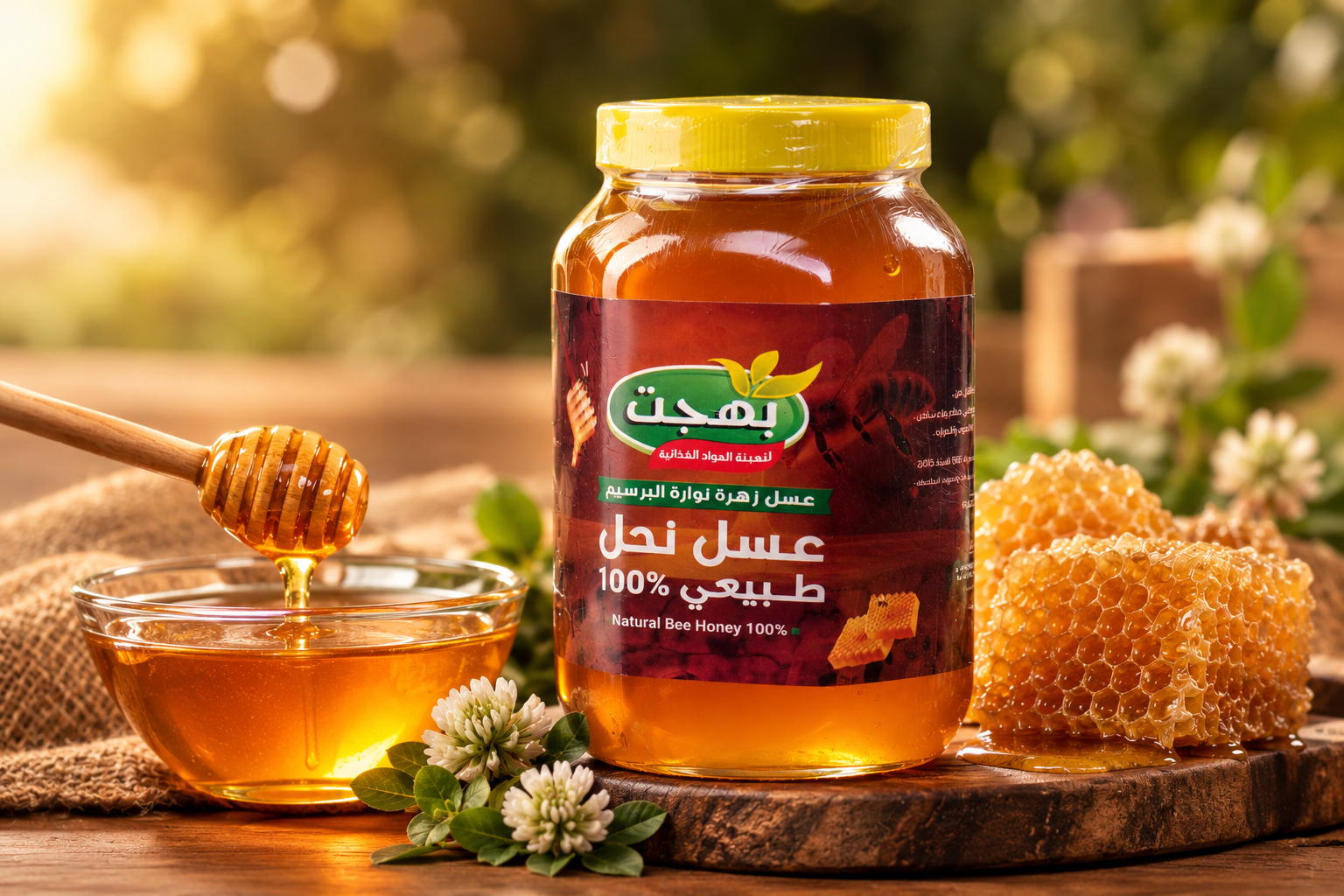
Berseem is the honey many Egyptians grew up with: pale, mild and gently sweet. It suits a glass of tea, a spoonful of yoghurt or warm bread without taking over. Our clover grows in the sandy, sun-soaked soil of Wadi El Natrun, and the honey it gives is especially clean and light.
Quality You Can Trust
Certified
Certified by the Egyptian Organization for Standardization and Quality (EOS)
Nothing added
100% honey, and nothing else
Grown with care
Farmed with magnetic water treatment and clover-fed soil
Part of a larger group
Bahgat Farms is the food & agriculture division of Delta Way General Trading, itself a Bahgat Enterprises company. It's a structure that lets us stay close to the land while drawing on a broader trading network for logistics, export relationships and corporate support.
-
01
Holding Company
Bahgat Enterprises
Visit website -
02
General Trading
Delta Way General Trading
Visit website -
03 Food & Agriculture
Bahgat Farms